

From Floor to Roof: 7 Home Energy Upgrades for Irish Homes

With heating bills rising and climate targets tightening, more homeowners are exploring retrofit measures that not only lower energy costs but also increase comfort and reduce environmental impact. 

A home’s Building Energy Rating (BER) reflects how efficiently it uses energy. By upgrading key areas such as insulation, windows, heating systems, and ventilation, you can make a significant improvement to both your BER and your everyday quality of life. 

This article breaks down the 7 key home energy upgrades you should consider, and how they contribute to a more energy-efficient home. 

Navigate through the upgrades

1.Floor Insulation:

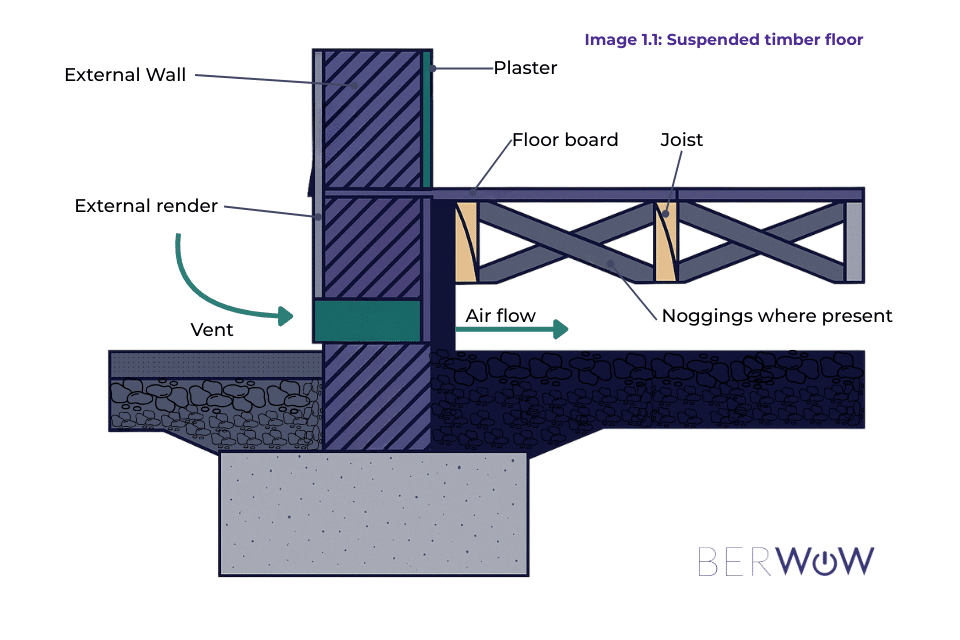
Floor insulation is often overlooked, yet it plays a vital role in preventing heat loss. In older Irish homes, especially those built before the 1980s, many properties have suspended timber floors with empty, vented voids underneath. These gaps allow cold air to pass through the floorboards, leading to chilly rooms, draughts, and higher energy bills. 

Suspended Floor Insulation
Image 1.1: Suspended timber floor

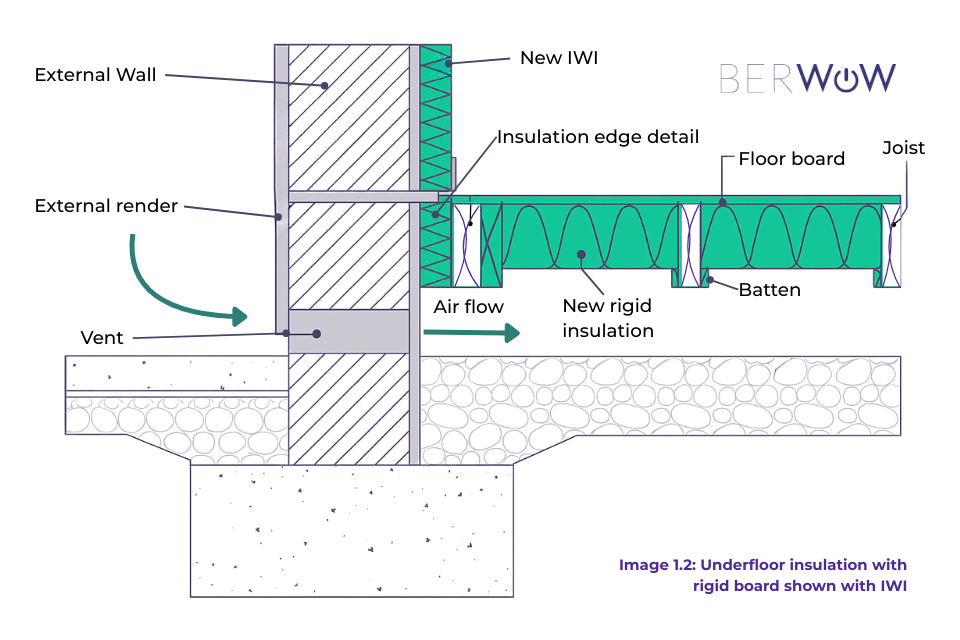
To address this, the most effective solution involves lifting the floorboards and installing insulation between the joists. Materials such as mineral wool, spray foam, or rigid insulation boards can all be used to fill the void and block unwanted airflow.  

In homes where underfloor heating is being added, there are also systems that combine insulation with heating pipework within the timber floor structure.  

Suspended Floor Insulation
Image 1.2: Underfloor insulation with rigid board shown with IWI Source: NSAI S.R. 54, Code of Practice for energy efficiency Retrofit of dwellings (reproduced with permission of NSAI)
For areas like bedrooms situated above unheated garages or recessed porches, applying rigid insulation boards to the underside of the floor can effectively reduce cold spots and heat loss. These measures help stabilise indoor temperatures throughout the year and create a noticeably more comfortable living space. 

2. Wall Insulation

Wall insulation is one of the most impactful energy upgrades a homeowner can undertake. Walls usually represent the largest surface area for heat loss in a home, and the type of wall you have will determine the best method of insulation.

External Wall Insulation

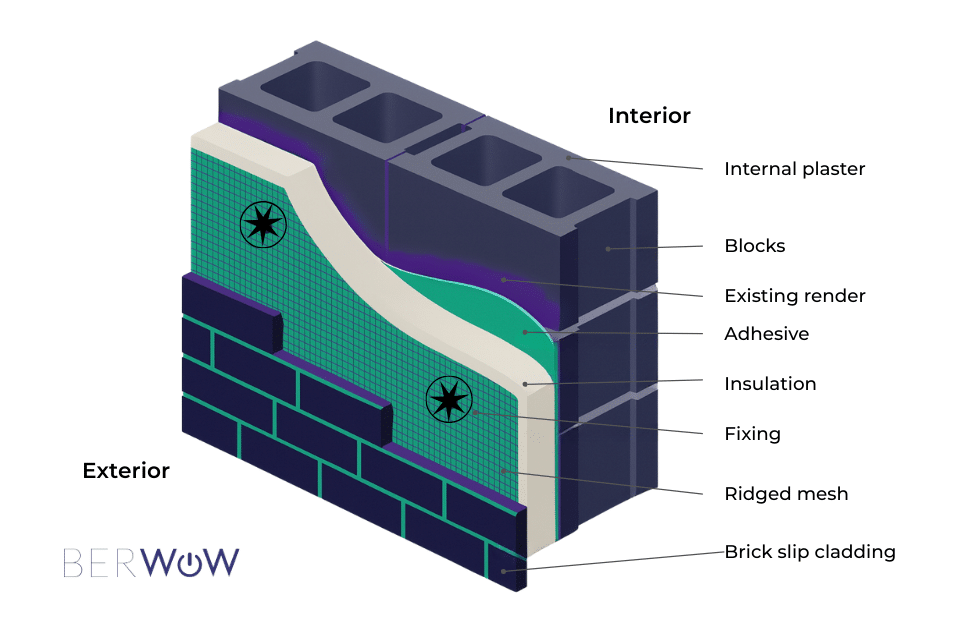
External wall insulation is particularly effective for solid block or mass concrete walls, as it involves fixing insulation materials such as mineral wool or expanded polystyrene to the outside of the property. The insulation is then covered with a weather-resistant render or cladding. This not only improves energy performance but also enhances airtightness and protects against damp and frost damage. 

External Wall Insulation
Image 2.1: Sketch of external wall insulation system (typical dry system) Source: NSAI S.R. 54, Code of Practice for energy efficiency Retrofit of dwellings (reproduced with permission of NSAI)

Internal Wall Insulation

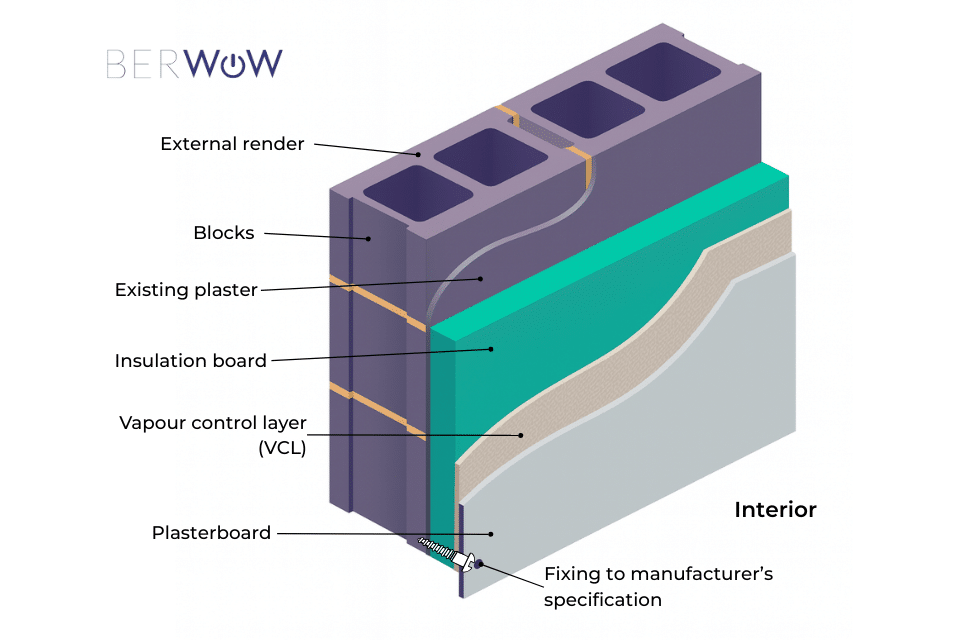
For homes where exterior changes are not possible or desirable, internal wall insulation can be applied by fixing insulated boards to the inner surfaces of the walls. This method is useful in terraced houses or properties with façade preservation requirements, although it does reduce internal floor space and often requires redecorating. 

Internal Wall Insulation
Image 2.2: Sketch of internal wall insulation system (thermal laminated board fixed to internal face of wall) Source: NSAI S.R. 54, Code of Practice for energy efficiency Retrofit of dwellings (reproduced with permission of NSAI)

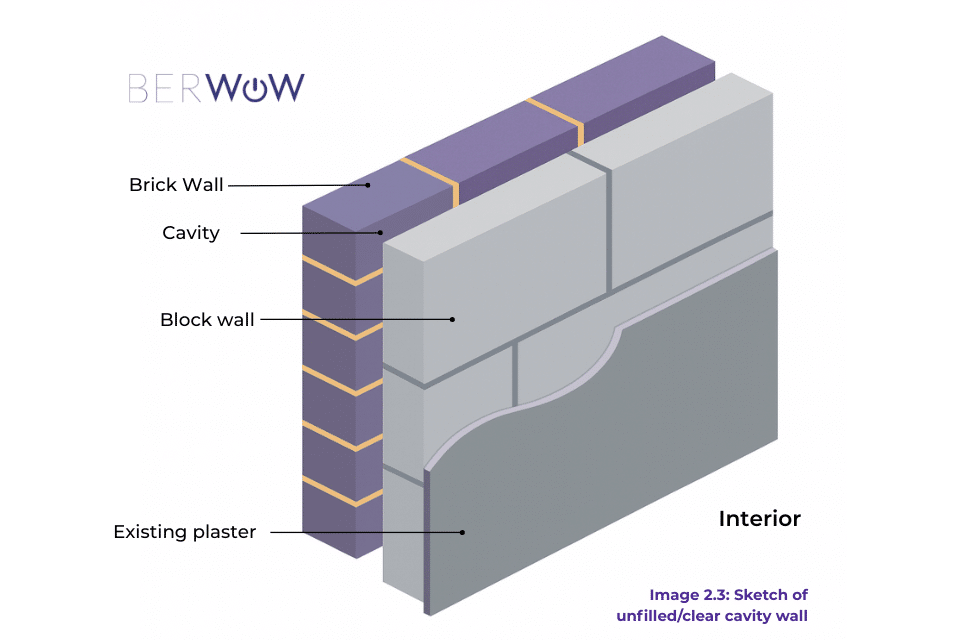
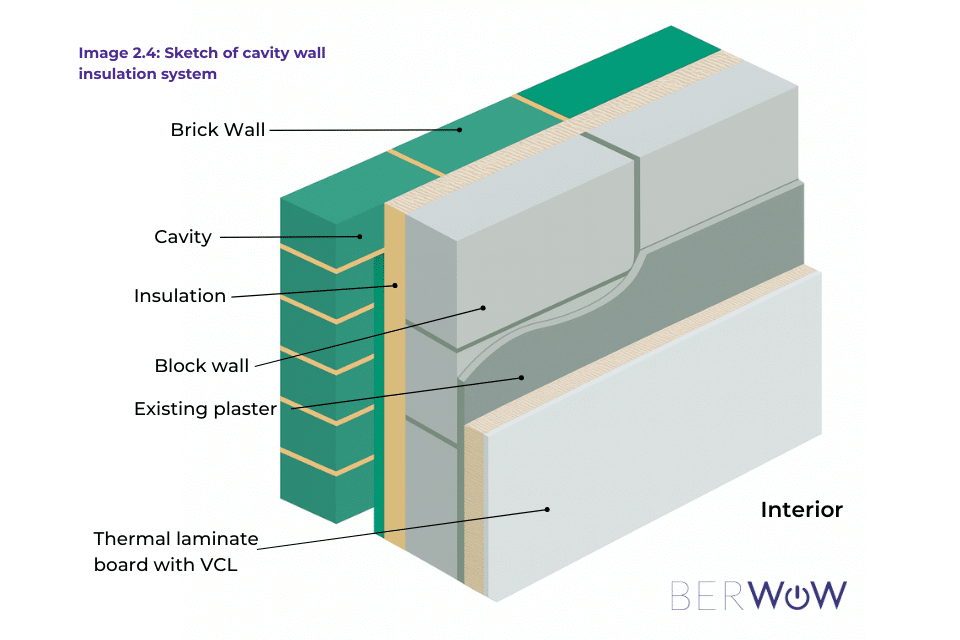
Cavity Walls Insulation

In homes with cavity walls, a common solution is to drill into the outer wall and inject insulation beads into the cavity. This is a relatively quick and affordable upgrade for homes built before the mid-1980s.  

Cavity Wall Insulation
Image 2.3: Sketch of unfilled/clear cavity wall
Image 2.4: Sketch of cavity wall insulation system (partial fill cavity with IWI top up) Source: NSAI S.R. 54, Code of Practice for energy efficiency Retrofit of dwellings (reproduced with permission of NSAI)

Timber-Frame Wall Insulation (in roof spaces)

In attic spaces or dormers where timber-frame walls are more common, insulating between the studs or adding internal rigid boards ensures thermal continuity.  

Timber-frame Wall Insulation (in roof spaces)
Image 2.5: Sketch of timber-frame wall insulation system (insulated light shaft) Source: NSAI S.R. 54, Code of Practice for energy efficiency Retrofit of dwellings (reproduced with permission of NSAI)

Each wall insulation method contributes significantly to reducing energy use and improving comfort. 

3. Roof Insulation

The roof is a major pathway for heat loss, accounting for as much as 25% of a home’s total energy escape. Fortunately, roof insulation is one of the most cost-effective and straightforward upgrades available. 

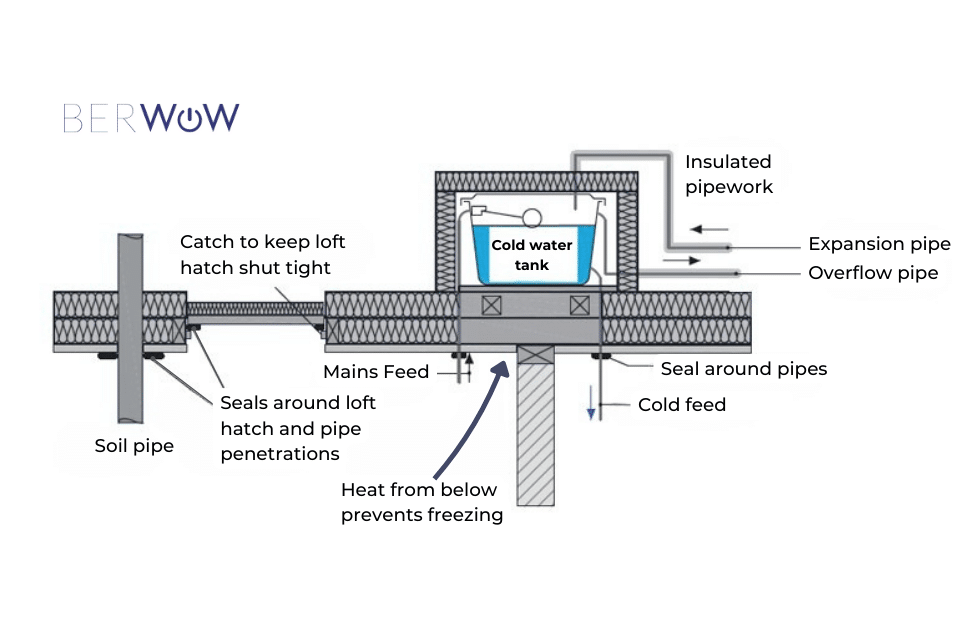
For most homes with accessible attics, ceiling-level insulation is the first priority. This typically involves laying mineral wool between the ceiling joists and then cross-laying another layer to reach a total depth of 300 millimetres. In some cases, areas of the attic can still be floored for storage as long as the insulation remains uninterrupted. 

Ceiling Level Insulation
Image 3.1: Insulating water tanks and sealing penetrations to the roof Source: NSAI S.R. 54, Code of Practice for energy efficiency Retrofit of dwellings (reproduced with permission of NSAI)

Sloped Roof / Rafter Insulation

For homes with sloped ceilings or converted attic rooms, insulation needs to be applied at the rafter level. This involves fitting rigid boards between or beneath the roof rafters while maintaining proper ventilation to the ridge.  

Sloped Roof_Rafter Level Insulation
Image 3.2: The use of high-performance insulation between and below rafters Source: NSAI S.R. 54, Code of Practice for energy efficiency Retrofit of dwellings (reproduced with permission of NSAI)

Flat Roof Insulation

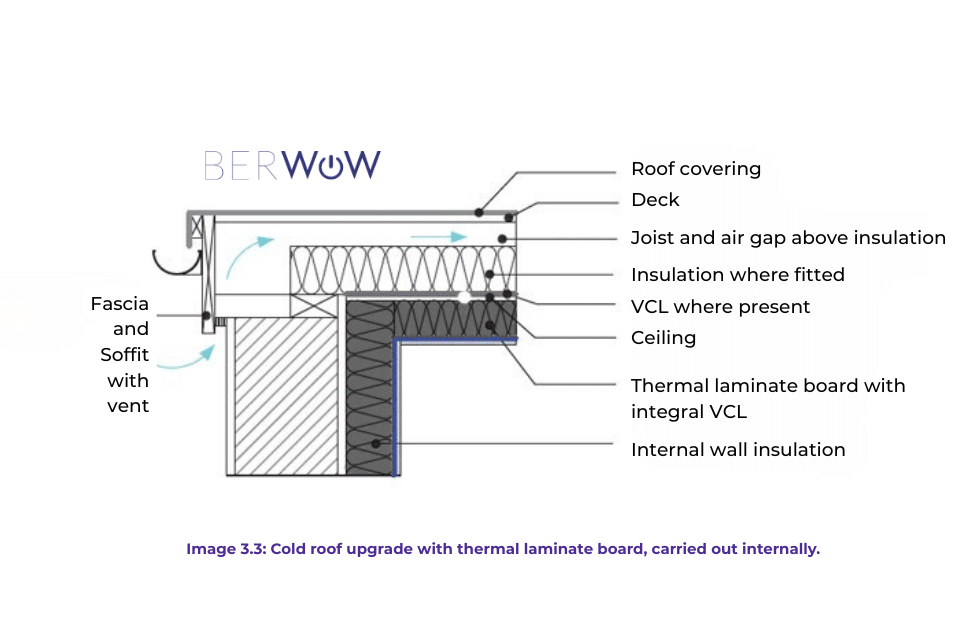
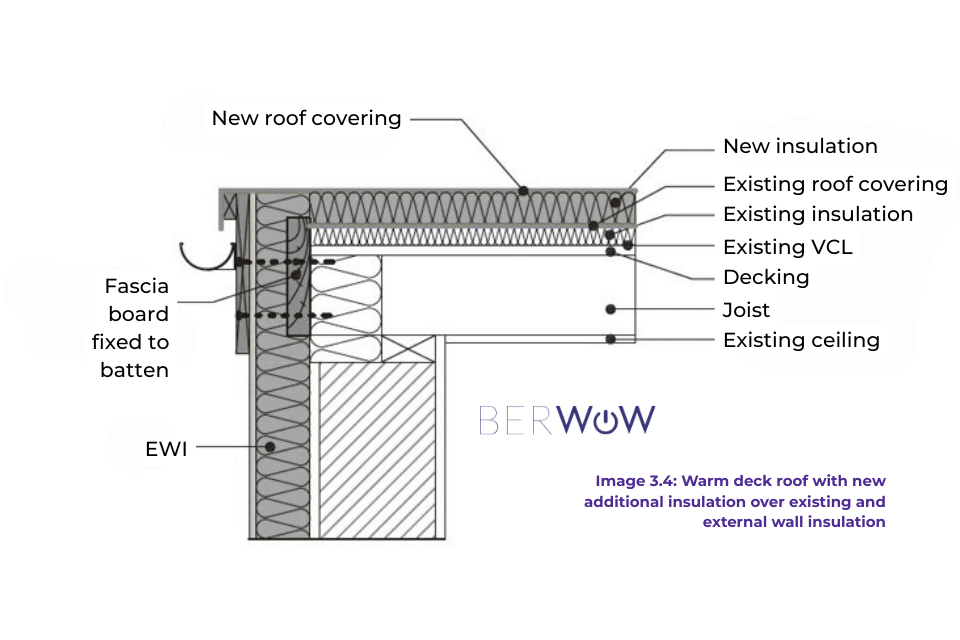
Flat roofs present a different challenge and should be professionally assessed. Depending on the structure, insulation may be applied internally beneath the ceiling or externally on top of the existing roof with a new waterproof membrane. 

Flat Roof Insulation
Image 3.3: Cold roof upgrade with thermal laminate board, carried out internally.
Flat Roof Insulation
Image 3.3: Cold roof upgrade with thermal laminate board, carried out internally.

Room-in-Roof

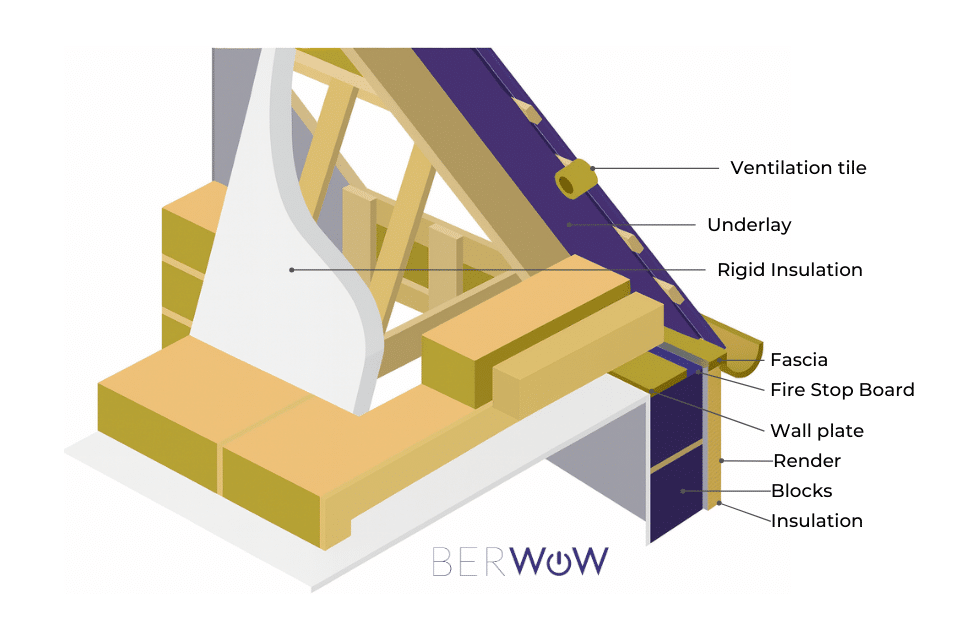
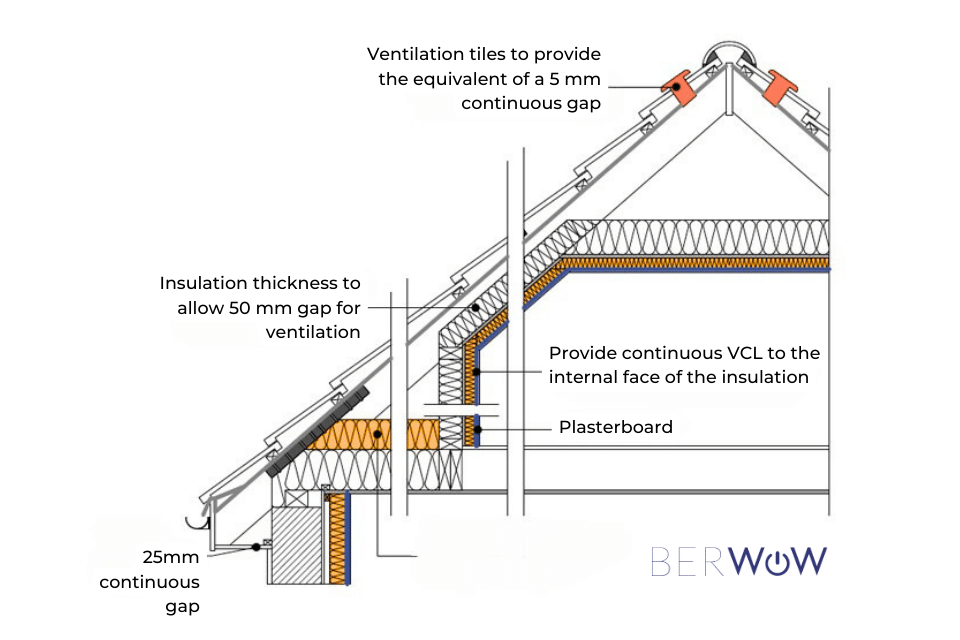
In attic conversions or rooms-in-roof, all external surfaces such as stud walls, slopes, and hatches must be thoroughly insulated to avoid cold bridges. Airtightness is also essential, especially where unused roof spaces are ventilated and cold.  

Room In Roof Insulated On Side
Image 3.5: Ventilation required for a room in the roof space Source: NSAI S.R. 54, Code of Practice for energy efficiency Retrofit of dwellings (reproduced with permission of NSAI)

With these upgrades, heat retention improves significantly and upper rooms become much more comfortable throughout the seasons. 

4. Windows and Doors

Old, inefficient windows and doors are responsible for heat loss, draughts, and external noise, particularly in homes that still have single glazing or early double glazing. Replacing them with modern, energy-efficient units is an important step in improving a home’s BER. 

New windows and doors not only prevent unwanted air leakage but also help retain solar heat that enters during the day. High-quality glazing and properly sealed frames eliminate draughts and significantly reduce external noise.  

To ensure that the performance of these upgrades is accurately reflected in your BER rating, it is important to request independently certified test results from an accredited body.

Image 4.1: Window energy performance label Source: NSAI S.R. 54, Code of Practice for energy efficiency Retrofit of dwellings (reproduced with permission of NSAI)

Overall, upgrading windows and doors creates a more comfortable and quieter indoor environment while also improving energy efficiency. 

5. Heating System Upgrades

Once insulation has been improved, the next priority is to ensure the heating system matches the energy efficiency of the home. Many older systems are inefficient, losing substantial amounts of energy even during normal operation. Upgrading to a modern heating system not only saves energy but also improves indoor comfort. 

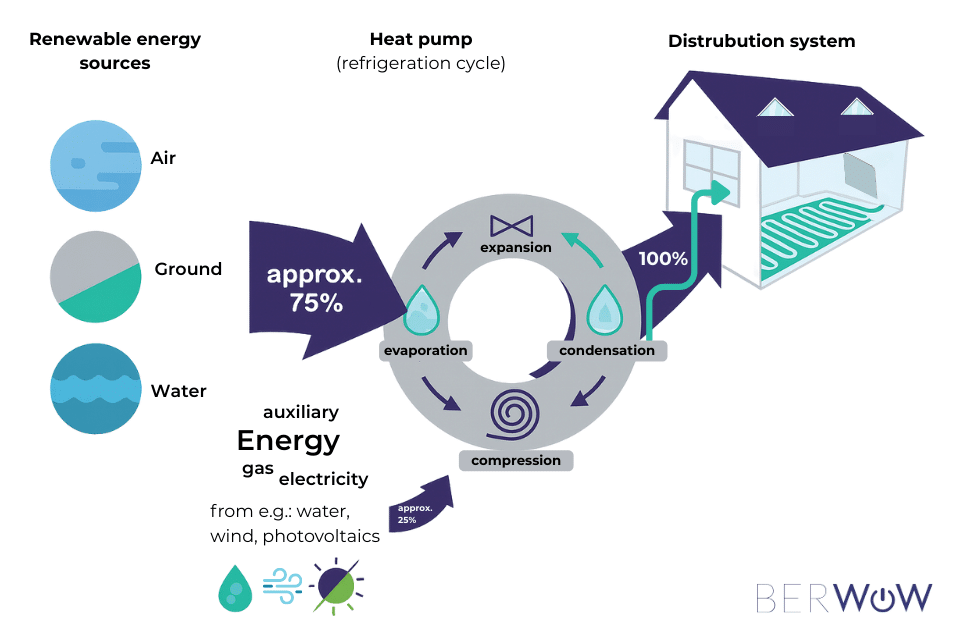
Heat pumps are one of the most efficient solutions available today. They work by extracting heat from the air or ground and transferring it indoors for space and water heating. An air-to-water heat pump, for example, can deliver up to five times the heat energy compared to the electricity it consumes.  

How do heat pumps work?
Image 5.1: Heat pump technology and application

Homes with good insulation and airtightness are ideal candidates for heat pumps. For homes not yet suitable for heat pumps, replacing old boilers with high-efficiency condensing models is a valuable upgrade. These boilers achieve over 90% efficiency and reduce emissions and running costs. 

Heating Controls

Modern heating controls are also critical. Adding programmable thermostats, smart zoning, and app-enabled systems allows homeowners to fine-tune their heating schedule for different rooms and times. This not only increases comfort but ensures fuel is used only when and where it’s needed, reducing waste and costs. 

6. Ventilation Upgrades

As insulation and airtightness improve, ventilation must also be upgraded to maintain healthy indoor air. Without proper ventilation, moisture and stale air can accumulate, leading to mould growth and poor indoor air quality. 

Demand Control Ventilation (DCV)

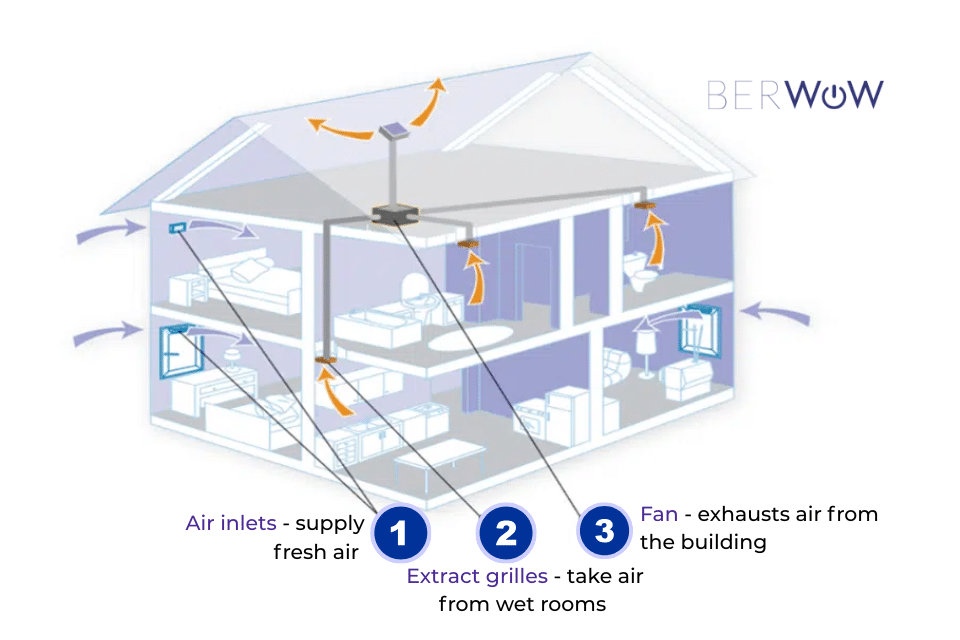
Demand Control Ventilation systems are ideal for retrofit projects. These systems monitor humidity and air quality, adjusting airflow as needed.  

Demand control ventilation system
Image 6.1: Demand control ventilation system Source: Aereco Ireland (reproduced with permission of Aereco)

Mechanical Heat Recovery Ventilation (MHRV)

Mechanical Heat Recovery Ventilation systems go a step further by extracting warm, stale air and using it to pre-heat incoming fresh air. These systems are especially effective in well-insulated and airtight homes. 

Image 6.2: A typical heat recovery ventilation system layout

Other measures, such as sealing gaps at junctions, insulating attic hatches, and closing unused chimneys, can dramatically reduce unwanted air leakage 


For chimneys that are no longer in use, sealing them at the room level and at the roof while maintaining external ventilation helps prevent heat loss without creating moisture issues. These ventilation upgrades work hand in hand with insulation to ensure that your home remains both energy-efficient and healthy. 

Image 6.3: Sealing of chimney flues no longer in use . Source: NSAI S.R. 54, Code of Practice for energy efficiency Retrofit of dwellings (reproduced with permission of NSAI) 

7. Solar Energy

Solar energy is an increasingly popular way for Irish homeowners to reduce electricity bills and future-proof their homes against rising energy costs. There are two main technologies that contribute to BER improvements. 

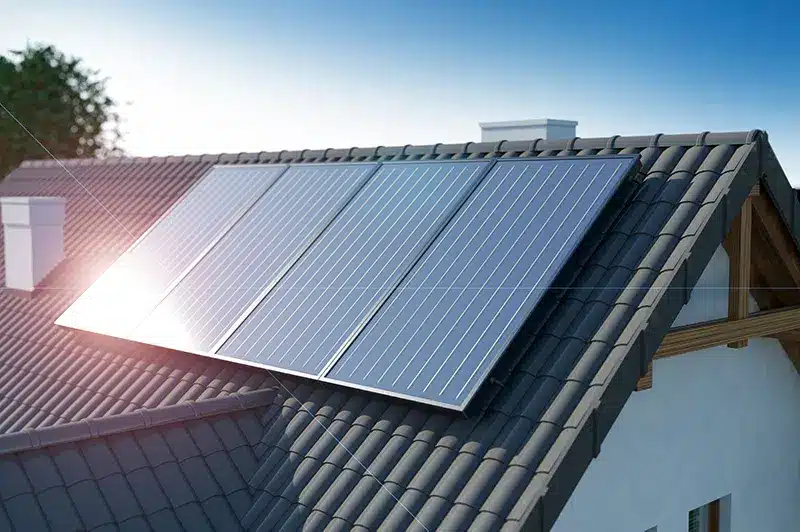
Solar photovoltaic panels generate electricity from sunlight and feed it directly into the home’s electrical system. This electricity can power household appliances, electric vehicles, and heating systems. Any surplus energy can be stored in batteries or exported back to the grid, depending on the system design. With SEAI grants available and typical payback periods under five years, solar PV is a compelling investment. 

Solar PV panels on roof of a detached house
Image 7.1: Solar PV panels on the roof of a detached house

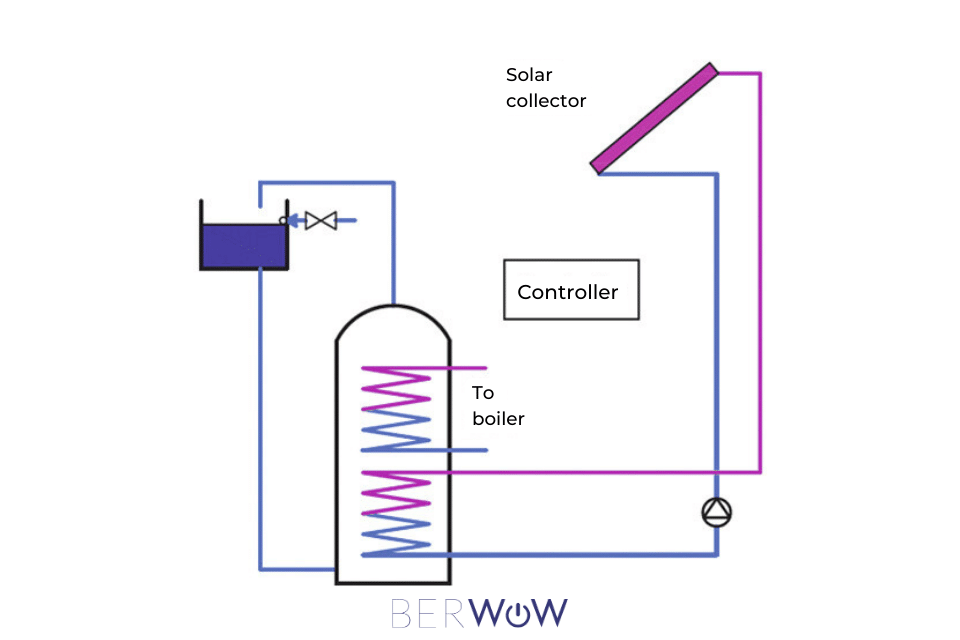
Solar thermal systems work by capturing solar heat and using it to warm domestic hot water. These systems can provide up to half of a household’s annual hot water needs, especially in sunnier months. They are typically combined with conventional boilers to ensure year-round supply.  

Typical schematic of a solar water heating system for connection to a boiler
Image 7.2: Typical schematic of a solar water heating system for connection to a boiler Source: NSAI S.R. 54, Code of Practice for energy efficiency Retrofit of dwellings (reproduced with permission of NSAI)

Both solar PV and solar thermal upgrades reduce carbon emissions and improve your BER score while delivering long-term savings. 

Discover the Right Upgrade Path for Your Home

Every home is different, and the right combination of retrofit measures depends on its construction, condition, and energy use. Whether you are considering floor insulation, wall upgrades, heat pump installation, or solar panels, it is important to understand how each measure fits into the overall strategy for improving your BER and reducing your energy bills. 

To simplify this journey, BERWOW offer an end-to-end digital solution for planning retrofits, estimating energy savings, understanding grants, and visualising long-term impact. 

Whether you’re a homeowner or an organisation supporting sustainability goals, BERWOW makes it easier to take the right steps toward a warmer, greener future. Learn more or book a demo at gammalabs.ie/berwow 

Share on Social Media

Related Articles

If you’d like to make something special, get in touch.