Discover practical improvement measures tailored to your home. From insulation to heating upgrades, and see the financial, comfort, and carbon benefits instantly.
BER Improvements are practical energy-saving upgrades recommended through your Building Energy Rating. With BERWOW, homeowners can quickly see which measures, from insulation to solar PV, will make the biggest impact on comfort, energy bills, and carbon emissions.
Improving your home’s BER (Building Energy Rating) means reducing heat loss, cutting energy bills, and creating a more comfortable living space. ↓ Check all the improvements below to see how they can make a difference in your home.
Floor Insulation
Floors can account for significant heat loss and are often overlooked in retrofits. Insulating suspended and exposed/semi-exposed floors reduces draughts, improves comfort, and helps stabilise indoor temperatures year-round.
Suspended Floor Insulation
Many pre-1980s houses have suspended timber floors over a vented void. These offer little thermal resistance and can allow cold air through floorboards.
→ Upgrade solution:
Where boards can be lifted, add mineral fibre, spray foam, or rigid insulation boards to insulate and eliminate draughts.
If installing underfloor heating, there are solutions available that incorporate insulation and underfloor pipework into the suspended timber floor. Additionally, consider replacing the suspended floor entirely with a solid floor construction.
Image 1.1: Suspended timber floor Image 1.2: Underfloor insulation with rigid board shown with IWI
Source: NSAI S.R. 54, Code of Practice for energy efficiency Retrofit of dwellings (reproduced with permission of NSAI)
Exposed / Semi-Exposed Floor Insulation
Exposed floors occur where a front door is recessed, leaving a small section of bedroom floor above open to the air.
Semi-exposed floors include bedrooms above unheated garages.
→ Upgrade solution:
Fix rigid insulation boards to the underside of exposed/semi-exposed floors to reduce heat loss and eliminate cold spots.
Walls usually represent the largest area of heat loss in a home. Whether solid, cavity, or timber-frame, the right insulation method can drastically improve thermal performance, reduce bills, and increase comfort.
External Wall Insulation (EWI)
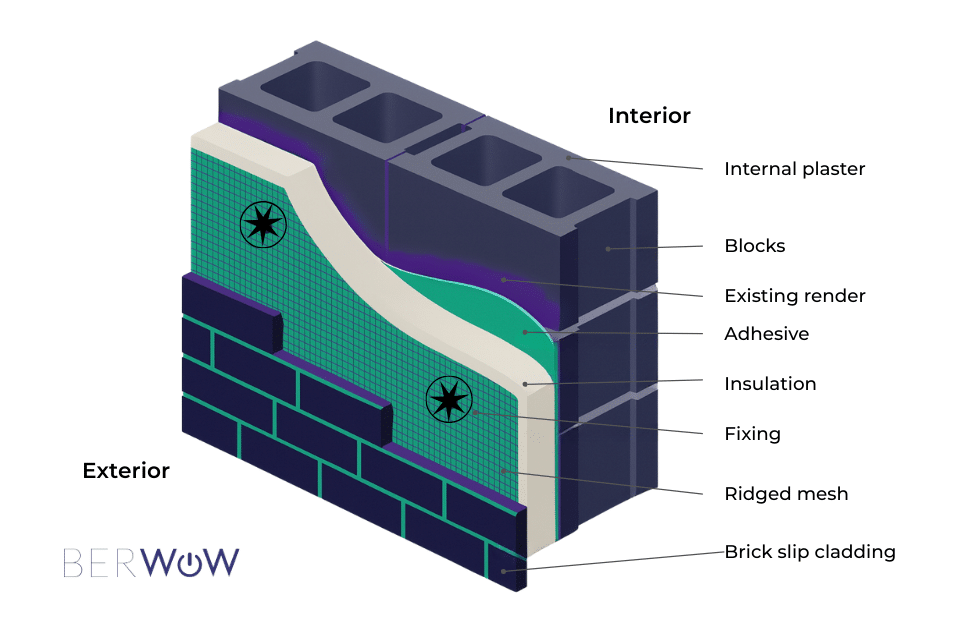
External insulation is the best way to insulate your exposed single-leaf solid walls, such as 225 mm block, hollow block, or mass concrete.
Insulation (mineral wool/EPS, etc.) is fixed externally and finished with weather-resistant render (mesh-reinforced), pebble dash, acrylic or brick cladding.
It can also address rain penetration, poor air-tightness and frost damage, and refresh your façade.
Target U-value: ≤ 0.27 W/m²K (SEAI grant standard) – for stone or brick walls built pre-1950, professional advice is essential before installing recommended thicknesses.
Certification: NSAI Agrément required
→ Standards:
Must comply with NSAI S.R.54 and use NSAI Agrément certified products to qualify for SEAI grants.
Image 2.1: Sketch of external wall insulation system (typical dry system)
Source: NSAI S.R. 54, Code of Practice for energy efficiency Retrofit of dwellings (reproduced with permission of NSAI)
Internal Wall Insulation (IWI)
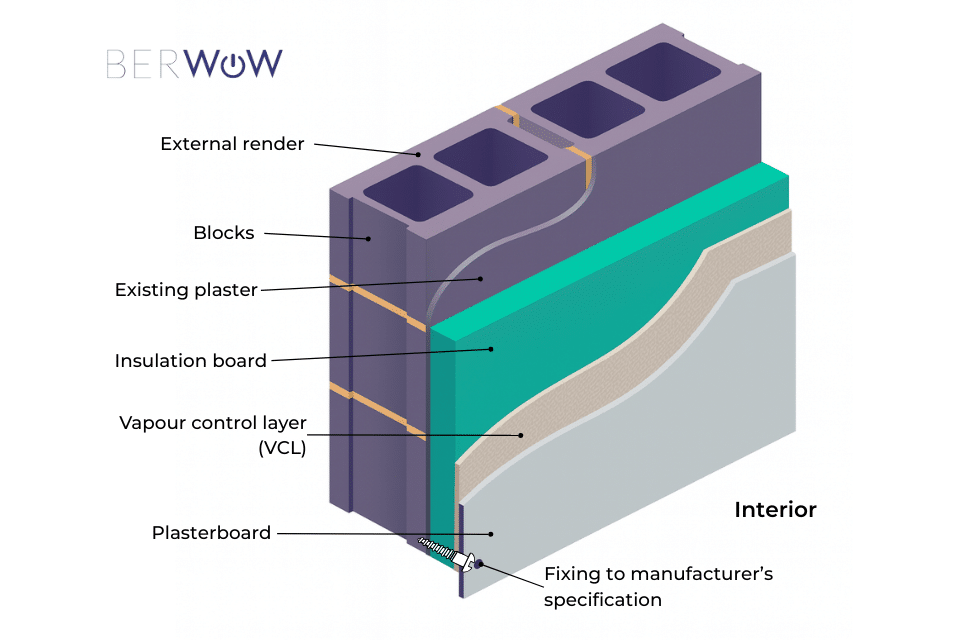
Internal insulation (sometimes referred to as ‘dry-lining’) involves fixing insulated laminated boards to the inner wall surface, with a vapour barrier and plasterboard finish.
It is suitable for retaining external façades, homes with boundary constraints, or partially insulated walls.
→ Drawbacks:
Reduces internal room space, requires redecoration, and may involve removing/reinstalling kitchens or fittings. High-performance thin boards minimise space loss.
→ Standards:
S.R.54 The Retrofit Code of Practice for Energy Efficiency Retrofit of Dwellings, published by NSAI (National Standard Authority of Ireland), provides detailed advice on optimising wall insulation solutions and how to avoid issues related to moisture ingress, dampness and interstitial condensation with different wall types. Your contractor will advise on the most appropriate solution.
Image 2.2: Sketch of internal wall insulation system (thermal laminated board fixed to internal face of wall)
Source: NSAI S.R. 54, Code of Practice for energy efficiency Retrofit of dwellings (reproduced with permission of NSAI)
Cavity Wall Insulation
A cavity wall consists of two rows of bricks or concrete blocks with a cavity or space between them. If a house was built before the mid-1980s and has cavity walls, it may have uninsulated cavity walls.
→ Upgrades:
Upgrade involves drilling external walls and injecting insulation beads into the cavity.
Typical U-value post-upgrade: ~0.35 W/m²K.
Cost: Generally cheaper than EWI or IWI.
In some cases, cavity insulation can be combined with either external or internal wall insulation for additional performance.
Image 2.3: Sketch of unfilled/clear cavity wall
Image 2.4: Sketch of cavity wall insulation system (partial fill cavity with IWI top up)
Source: NSAI S.R. 54, Code of Practice for energy efficiency Retrofit of dwellings (reproduced with permission of NSAI)
Timber-Frame Wall Insulation (in roof spaces)
Timber frame walls are uncommon in older Irish dwellings apart from short wall sections in attic conversions or rooflight shafts. If an older house has timber frame walls, it should not be externally insulated or cavity-filled.
→ Upgrades:
Replace insulation between studs and/or add rigid boards to the internal face.
BERWOW typically recommends this for attic rooms or rooflight shafts, where rigid insulation reduces heat loss to the roof space.
Image 2.5: Sketch of timber-frame wall insulation system (insulated light shaft) Source: NSAI S.R. 54, Code of Practice for energy efficiency Retrofit of dwellings (reproduced with permission of NSAI)
Roofs can account for up to 25% of heat loss. From simple attic top-ups to insulating sloped or flat roofs, roof insulation upgrades are among the most cost-effective retrofit measures.
Ceiling-Level (Cold Attic) Insulation
Adding insulation rolls to the roof space of a house to achieve a minimum total insulation depth of 300mm should be the first step when deciding to insulate.
→ Upgrades:
Add mineral fibre rolls between ceiling joists, cross-laying a second layer to achieve 300 mm total insulation depth.
Sections can be floored for storage if insulation continuity is maintained.
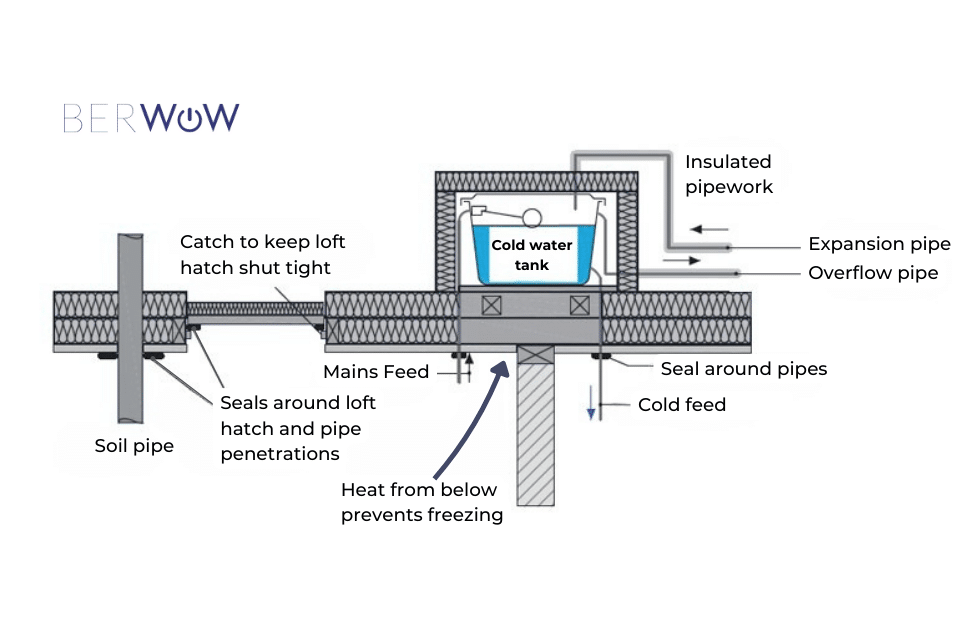
Correct insulation of pipework and the water storage tank would be recommended best practice, along with insulation and draught-proofing of the loft hatch.
Ventilation of the roof space would also need to be assessed and addressed as required.
Image 3.1: Insulating water tanks and sealing penetrations to the roof Source: NSAI S.R. 54, Code of Practice for energy efficiency Retrofit of dwellings (reproduced with permission of NSAI)
Sloped Roof / Rafter Insulation
Rafter-level insulation is placed in the slopes of the roof and is common where rooms exist in the roof space. It may also arise where some sections of the main roof have short rafter level sections to the front and rear of the dwelling, or where a ground floor or first floor room has been designed open to the pitch of the roof.
→ Upgrades:
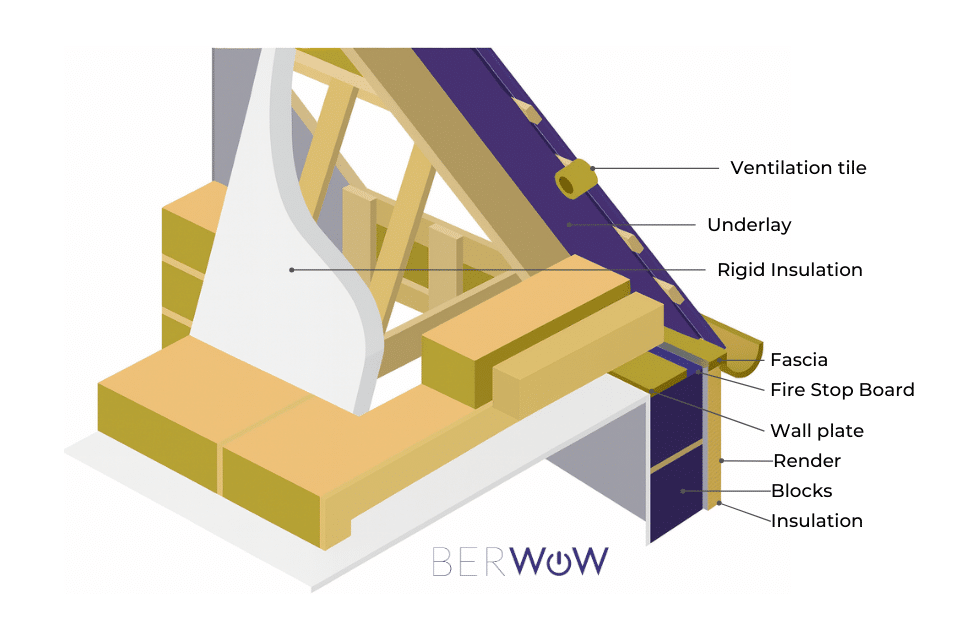
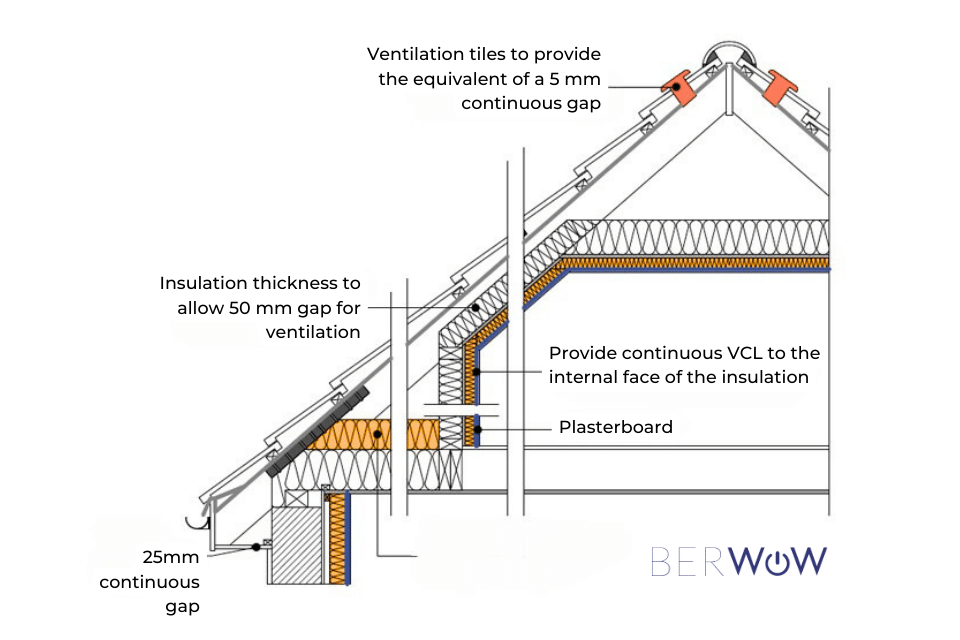
Fit rigid boards between and/or below rafters while maintaining a ventilation gap to ridge level.
Rigid boards provide ~2× the thermal performance of mineral fibre.
Image 3.2: The use of high-performance insulation between and below rafters Source: NSAI S.R. 54, Code of Practice for energy efficiency Retrofit of dwellings (reproduced with permission of NSAI)
Flat Roof Insulation
Insulation can be added to older flat roofs that have either no insulation or minimal levels of insulation. The existing roof structure will need to be professionally assessed to determine whether the additional insulation should be placed on the underside of the roof at ceiling level or on top of the existing roof.
Warm roof upgrade (external): Add insulation above the roof deck with a new waterproof membrane.
Image 3.3: Cold roof upgrade with thermal laminate board, carried out internally. Image 3.4: Warm deck roof with new additional insulation over existing and external wall insulation Source: NSAI S.R. 54, Code of Practice for energy efficiency Retrofit of dwellings (reproduced with permission of NSAI)
Room-in-Roof (Attic Conversion)
Rooms-in-roof or converted attics need to be well-insulated to avoid cold in winter and overheating in summer.
→ Upgrades:
For optimum heat loss performance, it is vital that all heat loss surfaces to outside and to the unused roof space/ storage areas are well insulated: stud walls, sloped roof, top sections, and hatches.
Airtightness is critical, as unused roof spaces are ventilated and very cold in winter.
Quite often, flimsy, uninsulated hatch doors that are not draught-stripped prove to be the weak spots.
A typical insulation solution for a room in the roof is shown in Image 3.5.
Image 3.5: Ventilation required for a room in the roof space Source: NSAI S.R. 54, Code of Practice for energy efficiency Retrofit of dwellings (reproduced with permission of NSAI)
Old windows often cause draughts, noise, and unnecessary heat loss.
Upgrading to energy-efficient units keeps warmth inside, reduces external noise, and ensures solar energy is retained.
Windows
New doors and windows will address the poorer thermal performance of existing units, will eliminate draughts, reduce external noise and help retain incoming solar energy.
→ Upgrades:
Replacing old windows and doors reduces draughts, heat loss, and external noise, while retaining solar gains.
Always request independent test certificates from an accredited body to ensure performance is reflected in BER calculations.
Image 4.1: Window energy performance label Source: NSAI S.R. 54, Code of Practice for energy efficiency Retrofit of dwellings (reproduced with permission of NSAI)
Efficient heating systems are essential to match improved insulation levels. Modern solutions such as heat pumps, condensing boilers, and smart controls lower energy costs while providing consistent comfort.
Heat Pumps - How Do They Work?
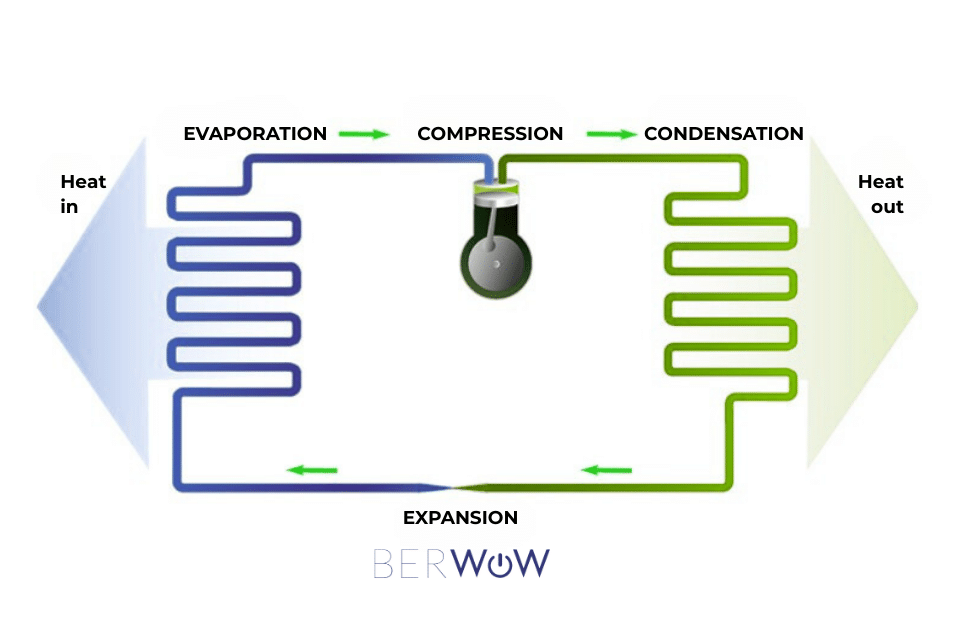
Heat pumps use electricity to deliver space heating and hot water by extracting heat from the air, ground, or water. The most common type is the air-to-water heat pump, which:
Absorbs low-temperature heat from outside air.
Compresses it into higher-temperature heat.
Transfers it into radiators, underfloor heating, and hot water cylinders.
→ Is my home ready?
Heat pumps perform best in well-insulated homes (most homes built after 2005 qualify).
To qualify for SEAI grants, your home’s Heat Loss Indicator (HLI) must be < 2.3 W/m²K (a BER-based measure of heat loss). The HLI must be verified by an SEAI-registered Technical Advisor.
Older homes may need insulation and/or window improvements first.
Image 5.1: Heat pump technology and application Image 5.2: Air source heat pump (air-to-water heat pump) Source: The Heat Pump Association of Ireland (reproduced with permission of HPA)
→ SEAI Heat Pump Grants (2024):
€6,500 for a house (air-to-water system).
€4,500 for an apartment (air-to-water system).
€3,500 for air-to-air systems (all dwelling types).
Heat Pumps - How Efficient Are They?
A heat pump’s efficiency is often measured in two ways:
Coefficient of Performance (COP): A lab measure. A COP of 4 means 1 kW of electricity delivers 4 kW of heat.
Seasonal Performance Factor (SPF/SCOP): Real-world performance across the year:
Space heating: 350–450% efficient.
Underfloor heating: up to 500%.
Low-temp radiators (≤55 °C): ~400%.
Hot water: ~200% (due to higher temperatures and immersion top-ups).
→ Note that the best…
Gas boilers are ~91% efficient.
Oil boilers are ~97% efficient.
Heat pumps: up to 5× more efficient, especially with underfloor heating.
Image 5.3: How does a heat pump work Source: The Heat Pump Association of Ireland (reproduced with permission of HPA)
Heating Controls
Modern heating controls will enable you to separate your hot water and radiator circuits and set on and off times independently. You will use less fuel and save money.
Many Irish homes have poor heating controls with no options to separately set temperatures and on-off periods for space or water heating, either in the home or remotely by smartphone.
Smart heating controls provide you with both local and App access to control your home heating, meaning you always come home to a warm home.
→ Upgrades:
Add modern zoning controls, 7-day programmer, motorised valves, thermostats, and smart/app controls.
Benefits: Better comfort, reduced energy use, boiler interlock (boiler only runs when needed).
Condensing Boilers
Boilers that are over 10 years old may lose up to 40% of the fuel you burn through emissions from the boiler’s exhaust or flue. Modern condensing boilers are 90% plus efficient and will reduce your energy consumption and fuel bills.
Condensing boilers replacements will give optimal performance if accompanied by:
A chemical flush to increase the efficiency of your heating system
A Magnaclean magnetic filter to protect and extend the operational life of the boiler
An endotherm additive solution to allow your radiators to heat up quicker and stay hotter longer
Smart heating controls to operate your heating remotely from your smartphone
→ Best practice:
Where possible, consider changing from a gas or oil boiler to a heat pump. Ongoing decarbonisation of the electricity grid will further reduce the carbon emissions of heat delivered by heat pumps.
As homes become more airtight, ventilation is critical to maintain healthy indoor air quality. Smart systems like DCV or MHRV balance efficiency with comfort, preventing dampness and improving well-being.
Demand Control Ventilation (DCV)
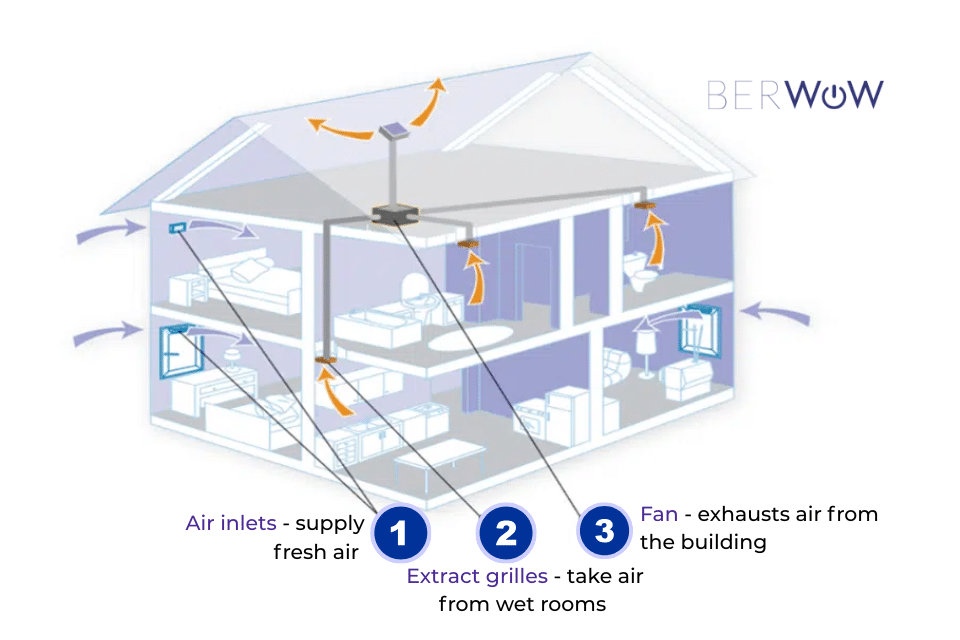
DCV is a whole-house ventilation system ideally suited to retrofit projects.
It combines humidistat-based vents in bedrooms and living rooms with mechanical extract vents in wet rooms to give a regulated air change regime.
Central fan auto-adjusts airflow with minimal electricity usage (similar to a low-energy lightbulb).
Low maintenance: No filters or wiring.
Image 6.1: Demand control ventilation system Source: Aereco Ireland (reproduced with permission of Aereco)
Mechanical Heat Recovery Ventilation (MHRV)
MHRV is a whole-house ventilation system that extracts stale, moist air from the dwelling at a constant rate.
It recovers heat from extracted air and uses it to pre-warm the replacement fresh air from outside.
Efficiency depends on airtightness and insulation levels.
Heat recovery % is the key metric; offset by the electricity use of fans.
→ These systems work best in well-insulated and airtight dwellings.
Image 6.2: A typical heat recovery ventilation system layout
Air Tightness Package
Many existing homes are draughty due to unwanted air gaps in the dwelling.
→ Upgrades:
Seal gaps at key junctions, draught-proof openings, and use tapes/membranes.
Often combined with DCV or MHRV for best performance.
Chimney Closure
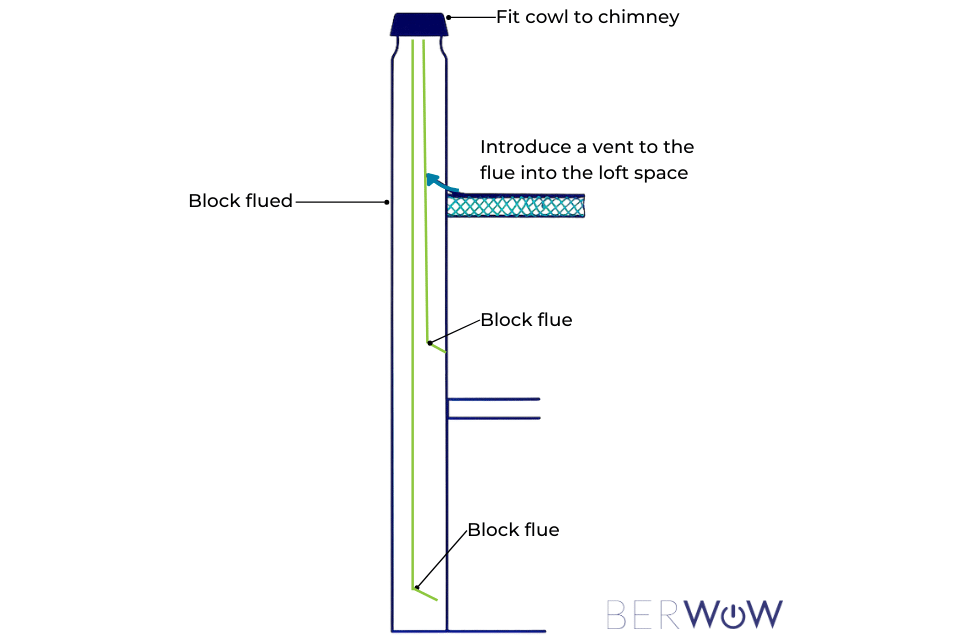
Sealing up a chimney that is no longer in use will prevent it from being a major air leakage path.
The chimney should be sealed:
Within the room, and
At the ceiling level of any insulated roof, to ensure that the chimney breast within a heated room does not contain cold air. This should prevent the potential for both surface and interstitial condensation on or within the chimney.
Above the level of the insulated ceiling, the chimney should be:
Ventilated from within the roof space to the outside of the dwelling
Capped to prevent ingress of moisture or rain whilst maintaining ventilation
Alternatively, ventilation of the flue should be maintained by a vent in the sealed fireplace. Where the chimney is on an outside wall, the internal face should be insulated.
→ Any alterations to flues should be performed by a suitably qualified person.
Image 6.3: Sealing of chimney flues no longer in use Source: NSAI S.R. 54, Code of Practice for energy efficiency Retrofit of dwellings (reproduced with permission of NSAI)
Harnessing solar power reduces reliance on fossil fuels and future-proofs homes against rising energy costs. Solar PV provides renewable electricity, while solar thermal covers a large share of hot water needs.
Solar Photovoltaic (PV)
Solar photovoltaic(PV) panels generate electricity from direct sunlight and natural daylight.
The electricity generated is then fed via an inverter into the home’s distribution board, where it can be used for different purposes in the home.
→ Benefits:
PV provides renewable zero carbon electricity
Electricity generated will power household appliances, heat pumps, electric/ hybrid cars, hot water immersion.
Batteries enable surplus electricity generated to be stored and used later.
Surplus electricity can be exported and sold to energy suppliers, reducing household bills
SEAI grants will reduce installation costs.
Payback is typically within 5 years.
Specification:
A typical PV panel measures 1m x 1.7m.
Modern models range from 380W to 450W peak outputMi.
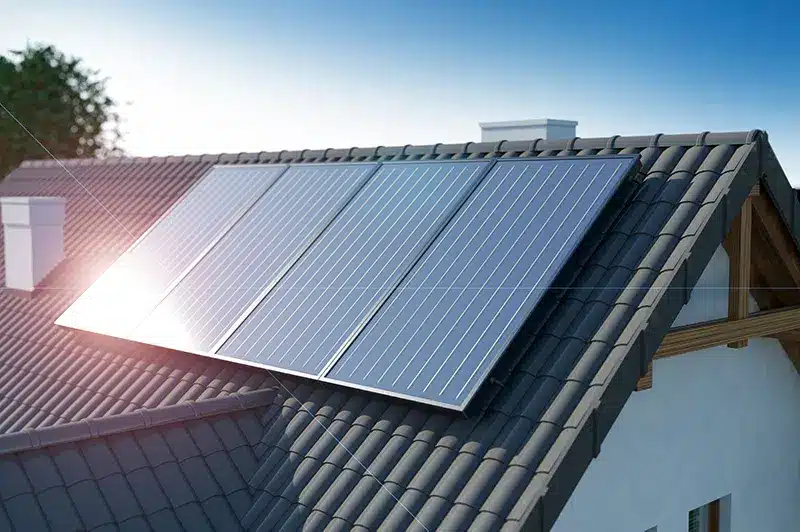
Image 7.1: Solar PV panels on the roof of a detached house
Solar thermal
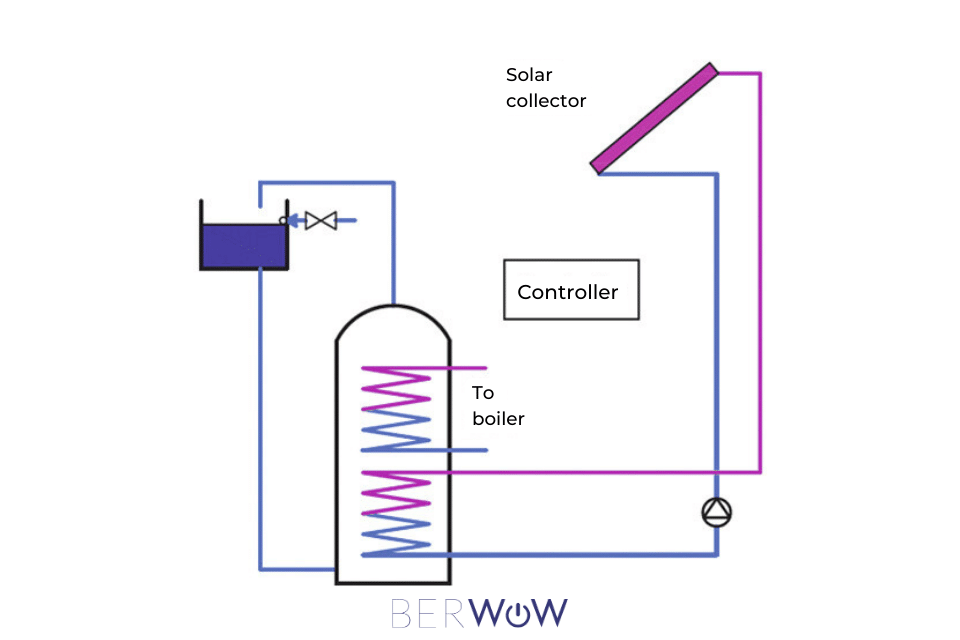
Solar thermal panels capture heat from the sun and use it to heat the hot water cylinder.
Solar collectors (flat-plate or evacuated tubes) heat domestic hot water cylinders.
In Ireland, it can provide ~50% of annual hot water demand, especially in summer.
Usually combined with a conventional boiler for a year-round supply.
Image 7.2: Typical schematic of a solar water heating system for connection to a boiler Source: NSAI S.R. 54, Code of Practice for energy efficiency Retrofit of dwellings (reproduced with permission of NSAI)
“We’ve found the BERWOW calculator incredibly useful in helping our customers visualise their upgrade journey. It’s quick, intuitive, and shows real insight into what improvements mean in terms of energy savings, cost, and comfort - all in just a few clicks.”
"BERWOW aligns with our strategic focus to ‘protect more of what matters’ and adds to a host of existing initiatives focused on sustainability and climate action."
Contact us
If you would like to know more about how you can benefit from BERWOW, use the contact details below.